Blog
Written By:
Renga Ramanujam Narasimhan
In today’s digital world, businesses rely on data as their fuel for growth, innovation, and competitive advantage. But without a strong grip on data quality, privacy, and compliance, that fuel can become a liability, leading to bad decisions, regulatory penalties, or even reputational harm. The good news: a robust Data Governance Framework can turn data into a trusted asset that drives reliable, insight-driven results for any organization.
What Is Data Governance — And Why Does It Matter?
Think of data governance as the rulebook and playbook for managing information across the organization. It spells out who is responsible for data, how it should be handled, and what controls are needed so that data remains accurate, secure, and usable for everyone. Data governance isn’t a bureaucratic hurdle — it’s the cornerstone for effective, ethical, and innovative use of data.
The Core Elements of a Strong Framework
Most effective governance frameworks are built on a few essential pillars. Here’s what every organization needs:
- People: Assign clear roles, such as Chief Data Officer, Data Owners, Data Stewards, and Data Administrators. Ownership ensures accountability and collaboration in data management.
- Process: Document and standardize how data is collected, accessed, shared, or retired. Processes might include approval workflows, access protocols, and regular quality checks.
- Technology: Use a unified platform with tools that help manage metadata, track access, and automate governance tasks for consistency and transparency.
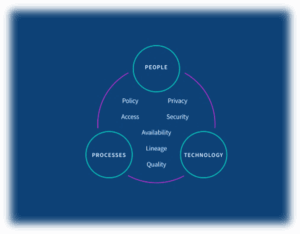
Four Pillars of Data Governance
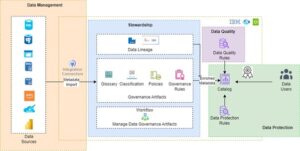
Let’s break down the four actionable building blocks:
- Data Management: Oversee data from collection to integration and beyond, ensuring it’s accessible and aligned with business goals.
- Data Stewardship: Appoint stewards and owners who maintain policies, monitor compliance, and uphold quality across the data landscape.
- Data Quality: Enforce standards for accuracy, completeness, consistency, and validity, with continuous monitoring and ongoing improvement.
- Data Protection: Safeguard data privacy and security with access controls, data masking, and compliance with regulations like GDPR or HIPAA.
Data Governance Framework
How to Launch a Data Governance Program
Getting started can feel overwhelming, but these practical steps demystify the journey:
- Define Strategy and Objectives: Set clear outcomes, whether it’s regulatory compliance, higher quality, or operational efficiency.
- Establish Accountability: Assign roles and make ownership visible for every major data domain.
- Ensure Transparency: Clearly communicate policies and practices organization-wide for buy-in and clarity.
- Develop Policies and Guidelines: Draft accessible, actionable standards for data usage, privacy, and sharing.
- Enable Continuous Monitoring: Track adherence, audit trails, and key data metrics to ensure improvement.
- Conduct Training & Awareness: Build a culture of responsibility and literacy around data stewardship at every level.
Conclusion
Data governance isn’t just about meeting compliance checkboxes — it’s a strategic advantage for making smarter decisions, boosting innovation, and building customer trust. With clear ownership, standardized processes, and the right technology, any organization can unlock the full power of its data and turn challenges into opportunities.
Related Resources:

Modernize Legacy Data Workloads Faster with DBShift™ + Snowflake — Webinar
Watch how DBShift™ automates legacy-to-Snowflake migration with high accuracy—live demo, architecture, and proven outcomes. Ideal next step after this article.

Unified Data with Snowflake & Systech
See how Systech leverages Snowflake’s power to deliver seamless, scalable data solutions.

Snowflake Partnership: Built for the Future
Explore how our Snowflake partnership empowers GenAI-driven transformation journeys.